
You can experience the Greeks, Etruscans and Romans vividly in the Antiquities Collections at Königsplatz. Works of art and everyday objects from antiquity – so-called minor art – made from a wide variety of materials such as ceramics, metal and stone allow visitors to immerse themselves in the world of antiquity.
The time frame begins with the Cycladic culture of the Aegean in the 3rd millennium BC and extends to late antiquity in the 5th century AD. Bavarian King Ludwig I (1786-1868), who was enthusiastic about classical antiquity, had already begun to expand the ruling family’s collection as crown prince. He instructed his art agent in Rome to acquire only pieces of outstanding quality, as he realised that his collection would never be able to compete with the museums in Rome, Paris or London in terms of sheer number of objects. As a result, the antiquities collections in all their areas are characterised by a multitude of unique, unusual and outstanding objects.
The State Collections of Antiquities are housed in the building designed by Georg Friedrich Ziebland (1800–1873) on the southern edge of Königsplatz. Together with the Benedictine abbey and the associated Basilica of St. Boniface, also designed by Ziebland, the building was constructed between 1838 and 1848.
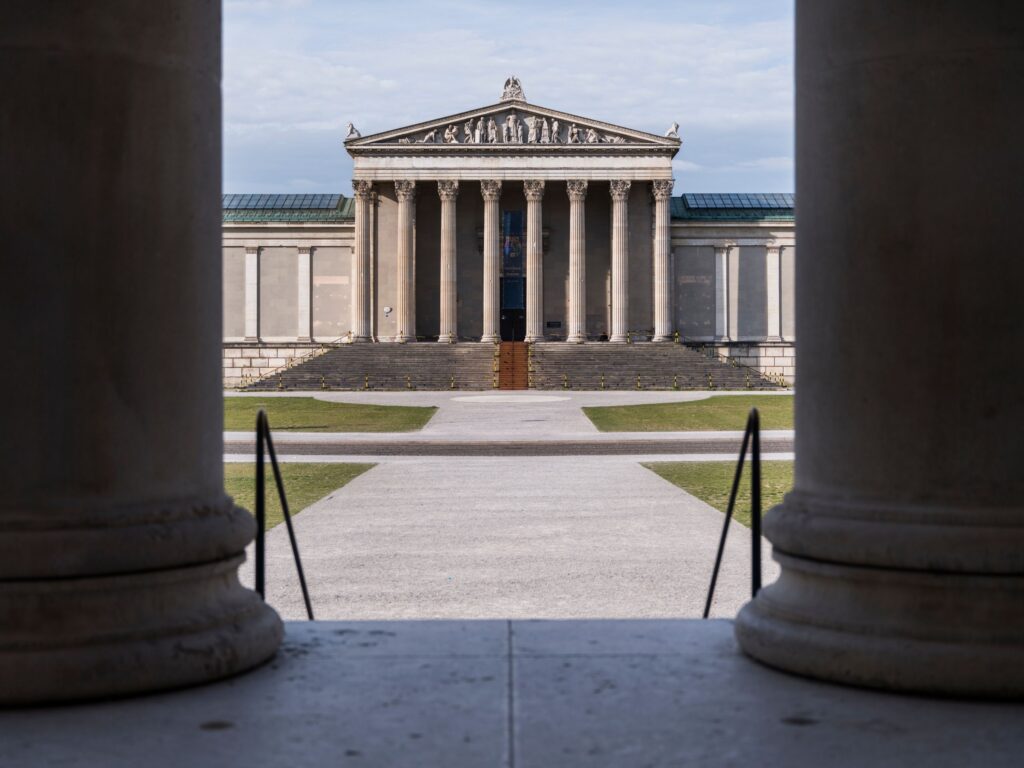
History of the Antiquities Collections
Collecting ancient artworks is a European tradition. Since the end of antiquity, Western kings and princes have used this practice to reference both classical education and the exemplary claim to power of the Roman Empire.
The museum’s earliest holdings originate from the art chamber of Duke Albrecht V of Bavaria (1550–1579). Over the centuries, the Wittelsbach family expanded their art collection in the ‘Antiquarium’ of the Munich Residence according to their personal interests. Ludwig I began acquiring antiquities in Italy on a large scale while still crown prince.
While the Greek and Roman sculptures were presented in the Glyptothek, the other items in the collection, such as vases, bronzes and jewellery, were distributed across several locations: At Ludwig’s request, the figuratively painted vases were displayed in the Alte Pinakothek as part of European painting, while the other objects were exhibited in the Neue Pinakothek as the ‘Royal Antiquarium’ from 1872 onwards. It was not until the First World War that the collections were brought together in the Alte Pinakothek as the ‘Royal Museum of Ancient Miniatures’ and then continued to exist as the ‘Museum of Ancient Miniatures’.
The museum’s inventory grew significantly in the 20th century. The excellent collection of antique terracottas by archaeologist Paul Arndt (1865–1937) was incorporated. Of particular significance was the collection of incomparable bronzes and jewellery bequeathed by banker James Loeb (1867–1933). During the Second World War, parts of the collection that had been moved to the Neue Pinakothek were lost in the bombing.
Shortly before the museum reopened in 1967 as the ‘Staatliche Antikensammlungen’ (State Collections of Antiquities), diplomat Hans von Schoen (1876–1969) bequeathed his collection to the museum. Most recently, the museum experienced a significant expansion with the addition of over 700 gems and ring stones from the Helmut Hansmann Collection (1924–1996), the world-renowned collection of Roman terra sigillata vessels from Munich physician and collector Prof. Dr. Klaus Wilhelm (2020), and the unique collection of Greek vases and selected antique small artworks from the couple Eva-Maria and Berthold Schneider (2025).
Events
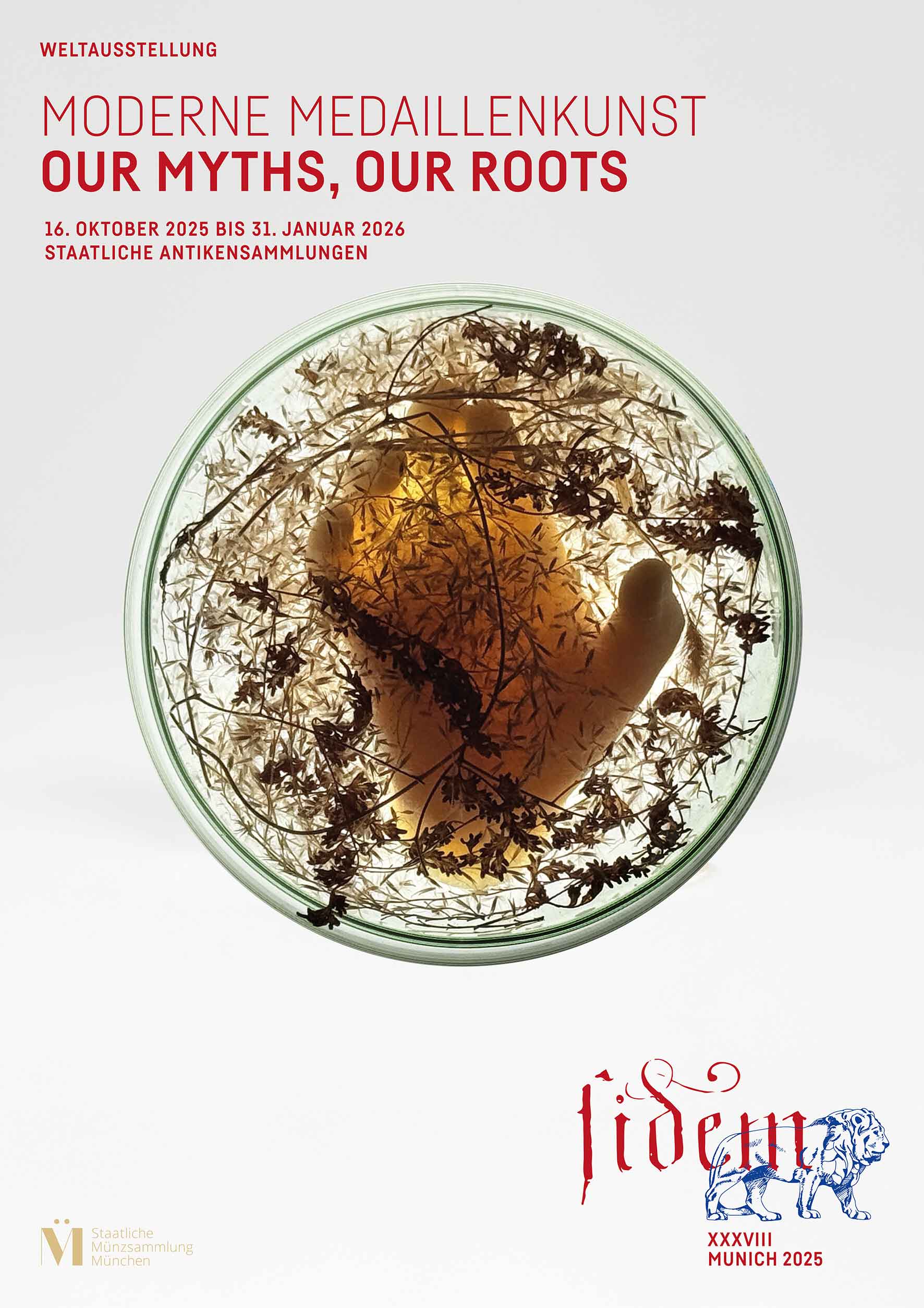
Special exhibition Collections of Antiquities: Our Myths. Our Roots – Unsere Mythen. Unsere Wurzeln
15.10.2025 – 25.01.2026 FIDEM XXXVIII. World Exhibition of Modern Medallic Art The world exhibition of modern medal art takes place in Munich for the first time (FIDEM XXXVIII). On display will be 500 art medals from over 30 countries, designed by 350 artists and oscillating between classical form and modern small sculpture. The works from … read more …
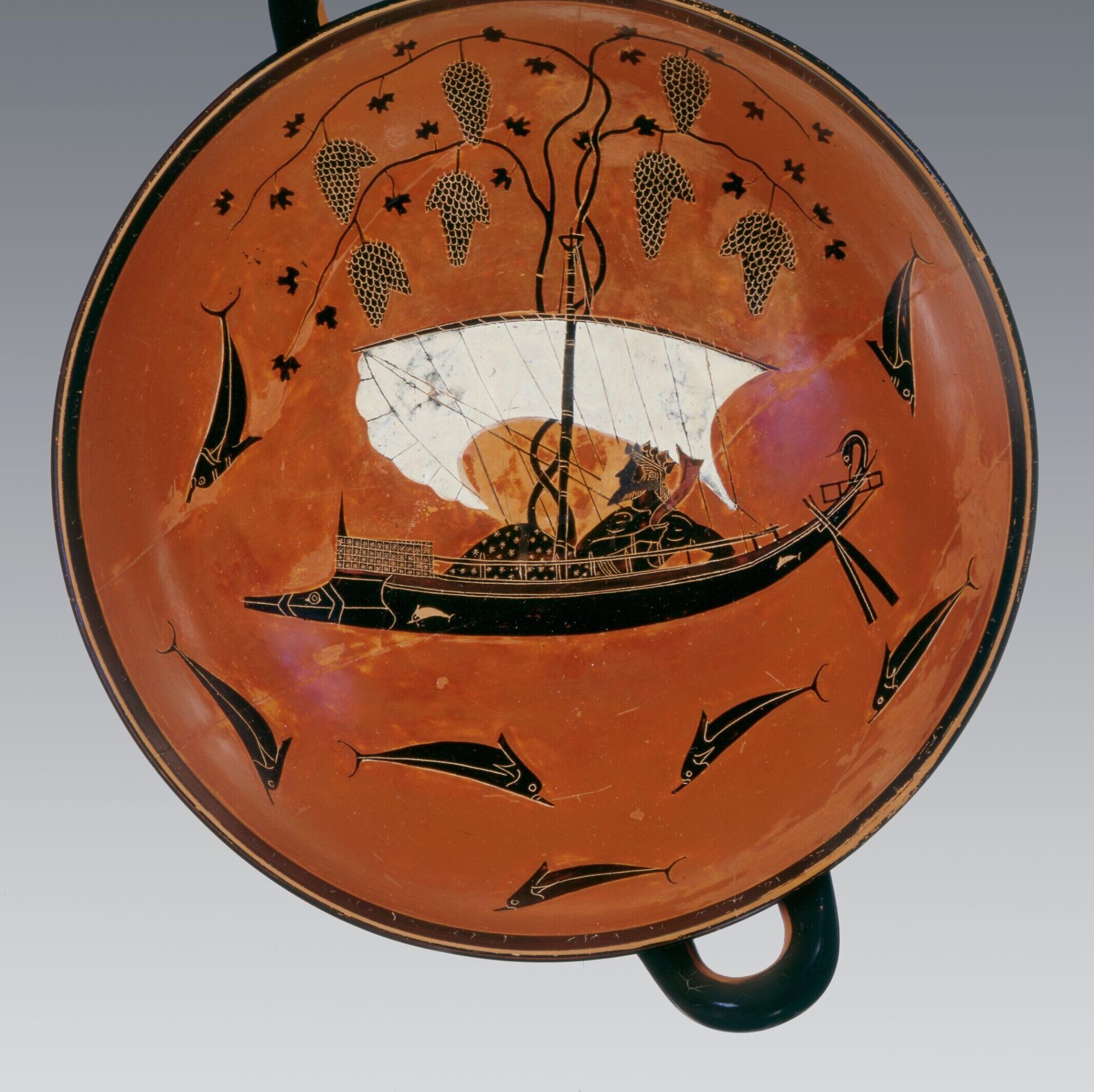
Permanent exhibition Collections of Antiquities: the entire spectrum of ancient “small art”
In order to distinguish it from “great” art – architecture, sculpture and painting – art history has coined the term “small art” for the many forms of small-format sculptures and decorated objects. Accordingly, the State Collections of Antiquities used to be called the “Museum of Ancient Small Art”. A visit to the Collections of Antiquities … read more …